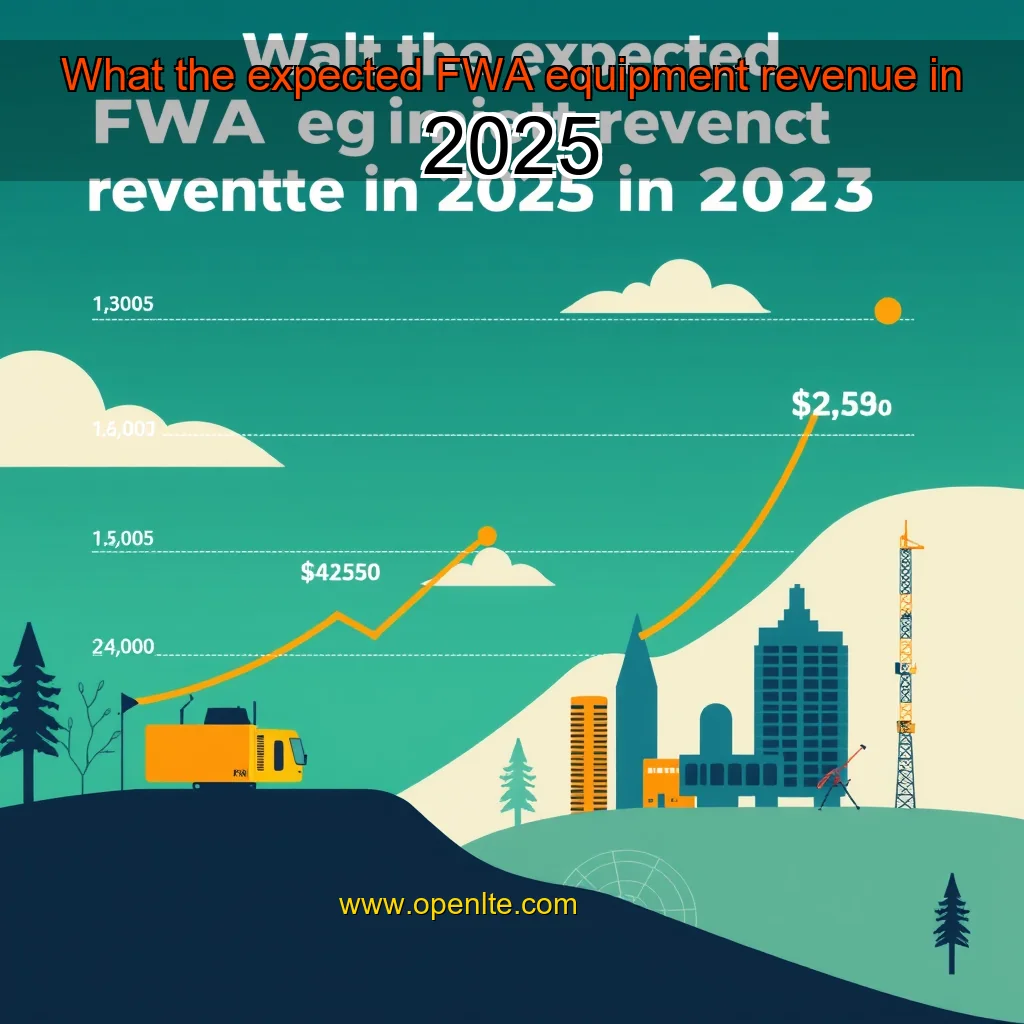
The market is expected to reach $13.5 billion by the end of the year, with a growth rate of 24.5% from 2022 to 2025. This growth is attributed to the increasing adoption of fixed wireless technologies in various industries, including healthcare, education, and government.
The Rise of Fixed Wireless Access
The Fixed Wireless Access market has experienced significant growth in recent years, driven by the increasing demand for reliable and high-speed internet connectivity. This growth is expected to continue in the coming years, with the market reaching $13.5 billion by 2025.
Key Drivers of Growth
Increasing adoption of fixed wireless technologies in various industries
Growing demand for high-speed internet connectivity
Advancements in wireless technology, including 5G and Wi-Fi 6
Decreasing costs of wireless equipment and infrastructure
The Impact of Fixed Wireless Access on Industries
The adoption of fixed wireless technologies is having a significant impact on various industries, including:
Healthcare: Fixed wireless technologies are being used to provide high-speed internet connectivity to hospitals and healthcare facilities, enabling them to access critical medical information and communicate with patients remotely. Education: Fixed wireless technologies are being used to provide high-speed internet connectivity to schools and universities, enabling students to access online educational resources and collaborate with peers remotely. Government: Fixed wireless technologies are being used to provide high-speed internet connectivity to government agencies, enabling them to access critical information and communicate with citizens remotely.
The Evolution of FWA: From Spectrum Monetization to Broadband Enabler
Early Days: FWA as a Spectrum Monetization Tool
In the early 2000s, Fixed Wireless Access (FWA) was primarily viewed as a means to monetize under-utilized spectrum. The technology allowed for the deployment of wireless networks in areas where traditional wired infrastructure was not feasible or cost-effective. This approach focused on providing internet access to underserved communities and rural areas. Key benefits of FWA in its early days: + Provided internet access to underserved communities and rural areas + Monetized under-utilized spectrum + Offered a cost-effective alternative to traditional wired infrastructure
The Shift to Broadband Enabler
Over the years, FWA has undergone significant transformations, evolving from a spectrum monetization tool to a major broadband enabler for homes and businesses.
Baburajan Kizhakedath
news
news is a contributor at OpenLTE. We are committed to providing well-researched, accurate, and valuable content to our readers.
You May Also Like

Samsung is working on dual - foldable devices and rollable hybrids.
This phone, codenamed "Project Galaxy," is expected to be a significant technological leap forward, potentially revolutionizing the way we interact...

Brown County Record | News , Sports , Jobs, Real Estate
Here's an example:
**Brown County
This document outlines the court records for a specific period, likely a month or a few weeks. It lists various...

Zions Bancorporation N . A . Has $110 , 000 Holdings in T - Mobile US , Inc . ( NASDAQ : TMUS )
This move by Zions Bancorporation N.A. signifies a shift in the company's investment strategy, potentially indicating a change in its...

Optical Transceiver Market to Grow by USD 10 . 3 Billion ( 2024 - 2028 ) with Strategic Supply Chain Collaborations , AI - Powered Market - Technavio
##
This growth is attributed to the increasing adoption of AI in various industries, including telecommunications, data centers, and cloud computing....